Back to First Page

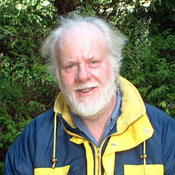
WHO IS THIS GUY?

The Short Answer

Nobody in particular.

The Slightly Longer Answer

Formerly noted as a wandering ne'r-do-well anarchist hippy professional student, now a settled ne'r-do-well superannuated anarchist hippy care worker living in London, earning sufficient that he is no longer a drain on the public purse. 55 years old (April 2002) a Belfast Irishman living in England (we're a big tribe) for a long time, former teacher, higher degree in Philosophy, formerly worked in the s**t end of satellite TV. (We installed the larger motorised dishes for international reception, mostly). Likes film, science fiction (has tried to write some), contemporary folk music, interested in alternative lifestyles (e.g. the commune movement), presently living in large house with lady named Jean and adopted daughter named Cherelle (aged 20 - now a student at Liverpool University). Also likes science (e.g. popular science books), amateur radio and electronics, scuba diving, travel (especially Asia - mad about Indian women but please don't tell anybody), good conversation, Chinese food (which he can cook himself when pushed), reptiles (not to eat but to befriend) and playing on the Internet (mankind's noblest creation).

The Groovy, Rambling, Surrealist "When is he Going to Get to the Point?" type Answer


When I consider the short extent  of my life, swallowed up in the eternity before and after, the small space that I fill or even see, engulfed in the infinite immensity of spaces unknown to me and which know me not, I am terrified and astounded to find myself here and not there. For there is no reason why it should be here, not there, why now rather than at another time. Who put me here? By whose order and design have this time and place been allotted to me? The memory of a guest who tarrieth for a day.

Pascal, The Pensees translated: J.M. Cohen
Penguin 1961


Yeah, well, that's kinda serious, though you can tell the kid's got talent and puts things quite well. When I think about my own life I don't see a neat date-by-date CV like you send in with a job application, it's more a sequence of vivid images separated by wide bands of gray nothingness, some of which you might label "more of the same", others of which just remain gray nothingness no matter what you do with them. The obvious way to tell it therefore is in the form of an outline film-script, though one that is lacking in any clear story line (suitable for the art-film market I would think). Readers should be careful to project the earlier scenes on to the mind's eye in black-and-white, with gate scratches and crackly sound.

Scene One is filmed on location in the little town of Ballyshannon on the west coast of Donegal in Ireland. The pre-teenage David is frolicking happily in the fields, catching tadpoles and newts in the local ponds and streams, attempting to do tricks on his bicycle which frequently involve riding through hedges, into ditches, down concrete steps etc. (the scars of which will be with him for the remainder of his days), building tree-huts, a full-size rowboat which sinks instantly in the local reservoir, making little radios with headphones and glowing glass valves ("tubes" if you live in America), falling in love almost daily with some new raven-haired ten-year-old beauty who maintains an attitude of total indifference to his existence (some things at least don't change), spending the summers (it's pretty well always summer) with his Uncle Irvine and Auntie Therese in the nearby seaside town of Bundoran, helping his Uncle to make boats that don't sink, filming with a real 8mm cine camera and viewing the resuls on a sheet pinned to the sitting-room wall, swimming in the sea, tuning-in to the radio hams on a real high-quality short-wave radio, tinkering with car engines and model aeroplanes and making amateur rockets powered by a mixture of sugar and weed-killer.

These are happy times, by and large. David's father is a shadowy figure, the local GP, seldom at home, it seems, but a kindly and well-liked man who seems to have a talent for just about everything. His mother is a rather stressed figure, for reasons the boy doesn't really understand, who can fly into a temper without warning. Our hero learns that life is frequently easier if he simply keeps out of her way. It isn't a particularly good strategy for coping with inter-personal conflict but it becomes deeply ingrained in our hero's personality, and, like the scars from falling off his bicycle, never really leaves him. The scene closes with a big red furniture removal van pulling away from the door of the Ballyshannon house and heading north for the border, and eventually Belfast.
 

Scene Two is set in the Headmaster's study of a Belfast Grammar School run by the Roman Catholic Church and staffed by priests and Christian Brothers, who belong to an order of teaching monks. Our hero is there along with his father, who is looking unusually red in the face, because he is far from pleased at having been summoned to give an account of the alleged Communist affiliations of his son. Our hero, it seems, has been building radio sets again, and has been listening to that godless, reprehensible font of propaganda and corruption, Radio Moscow. Worse than that, he has written in to the satanic radio station, which has replied to his letter and sent him a number of little tin lapel badges bearing the face of the first Russian cosmonaut, Yuri Gagarin. These he has been handing around to his school chums. It is another crisis in the troubled history of the Roman Catholic Church. The only way that the situation can be put to rights is if our hero and his irate father will RECANT! Yes, it's Galileo Galilei all over again! (But it still turns! The orbiting Russian satellite, that is.)

Dr. Robert Gardiner, a man already noted for his cynicism regarding the dogma of Mother Church, will not recant! In fact he inquires of the Father Inquisitor if he is planning at any time in the near future to grow up, removes his son forthwith from St. Malachy's College and places him instead in another, regrettably almost indistinguishable institution called St. Mary's. (And yet it was a famous victory.)

Scene Three is a happy scene. Our hero has gone to college and has left home (though in reality he is living only a few streets away) to join a highly political would-be anarchist student commune of four people, two of each sex, sharing a run-down though once grand Victorian house in a Belfast back-street. There is some inexplicable chemistry in the little group, everything they do seems to turn out well! Collectively they take over, to all intents and purposes, the Student Union, running the college magazine, the Education Committee (which in a Teacher Training College is the most important of the student committees) the Social Committee, the Debating Society, the Film Club, the Drama Group (where they produce a never-to-be-forgotten version of Cinderella with our hero as one of the Ugly Sisters and another communard as a somewhat raunchy Cinders), run a satirical pirate radio station that broadcasts weekly from different locations around Belfast, and manage to divert funds from the Union into far more leftwing projects than it has ever supported before, such as sending money to the anti-apartheid movement in South Africa, setting up a student exchange scheme with the Israeli kibbutzim, and getting A.S. Neill of the world-famous Summerhill Free School to come over to Belfast as a guest speaker. It is the era of love and peace, there is a great spirit of optimism in the air, the world (our hero and his friends believe) is never going to be the same again. Anything is possible. There is no need to reenact the mistakes of ones parents. There is no need to rebuild the world of greed and exploitation and war and hatred and competition and waste and want and ecological destruction and sexual possessiveness and all the rest that we were born into. Things can be different. We can write our own sociology. History, whether national or individual, does not have to be endlessly repeated. The times they are a-changing! Yes, we are as young as that!

There is one pivotal night when what seems like the final taboo is broken. It is a night when everyone is a bit tipsy, the Famous Four have been to a late-night barbecue, singing songs, letting their hair down. They arrive back to the rented house in a silly mood, the girl's start making jokes about how the boys preach sexual freedom but don't practice it. This isn't entirely true, there have been occasional nights of passion with outsiders for everyone in the group: what has never happened has been any kind of sexual "unfaithfulness" within the group. The group started out as two couples and that is how the dynamics have remained - up to this night. The reader may guess what follows - I will draw a veil over the details. In the morning the two boys (or should we think of them as men?) wake up in unfamiliar bedrooms, each with a young lady in his arms whom he would not normally encounter until breakfast. As the four meet in the kitchen there is a moment of tension, of not knowing what to say, of wondering if all the magic has been lost, if things can ever be the same again…. Then the moment is gone. It has passed. Things are not the same. They are better! The four hug in the middle of the kitchen floor. The "free love" theory has been put to the test and come through with flying colours. The world has not come to an end. Everything is going to be all right. The group is indeed invincible!

Scene Four is an outdoor scene filmed in the streets of Belfast. In fact some old news footage will serve very well. Men in dark suits and bowler hats with orange sashes over their shoulders are marching behind a band, at the front are massive banners bearing Lodge insignia and strange Masonic symbols. Screaming crowds line their route, cheering and dancing to the music of the bands. On rounding a corner the procession encounters a human road-block consisting of rank on rank of motionless young men wearing Balaclava helmets over their faces and carrying stout wooden poles. Some of the men towards the rear seem to be carrying something slightly less distinct, more sinister…

Cut to scenes of riots, burning buildings, police with tall see-through riot shields. Eerie camouflage-green armoured cars called Green Goddesses slide quietly along behind the line of advancing police. Some of them carry heavily shielded water-cannons. A sniper's bullet tears a lump of black tarmac from the road in front of the police and they scatter to either side….

Behind the barricades, in an upstairs room above a Public House, our hero and his friends tune-up a radio transmitter ready to broadcast on behalf of the (still pacifist) Belfast Civil Rights Movement. The microphone is taken by a young, stern-faced female lawyer holding a sheaf of papers. Our hero gives her the signal as the theme music fades down. "This is Radio Free Belfast," she intones proudly, "broadcasting to all the citizens of Belfast on behalf of all its citizens. For the first time since the beginning of this present wave of troubles in Northern Ireland, sanity has a voice in this city….."

As this shot fades out a similar one takes its place. This time the announcer is a man and he says that the station is Radio Free Derry.

A near repeat of the same shot. Radio Free Newry.

Once again. This time, Radio Free Ballymena. Free Armagh. Free Lisburn…. One shot fades in on top of another…..

Scene Four ends with a night-time shot of a burning warehouse in the centre of Belfast. A crowd has gathered at a safe distance and they are shouting and jeering at a figure that is just visible on the roof of the doomed structure, silhouetted against the soaring flames, in his right hand the unmistakable outline of a rifle. The crowd is excited because they have set fire to the building, and the tactic has been a success. As our hero watches the sniper sways twice, drops the rifle, and falls backwards into the flames. An enormous cheer goes up from the crowd. It is the first time that our hero has seen anybody die. It is the moment when he decides that Belfast is not where he is going to start building the socialist paradise. In reality, he is not even going to be given the opportunity.

Scene Five is an intimate indoor scene with low lighting and very quietly spoken dialogue. It takes place in the inner room of a Belfast police station, where our hero has been summoned for a friendly chat with one of the high-powered anti-terrorist officers sent over from London. It is just the two of them, separated by a modest desk, on which a green manila-backed file lies open. This file contains the most unbelievably detailed account of all our hero's activities: the schools he has attended, the story of his father's interview with the Headmaster of St. Malachy's, copies of articles he has written for school and University magazines, and for Freedom, the anarchist weekly newspaper, lists of his friends and associates, transcripts of speeches he has made in the Students' Union, press cuttings about the recent proliferation of pirate radio stations (which sadly have fallen into the hands of groups a lot less peaceful than the Civil Rights Movement). The interviewing officer knows more about our hero than our hero knows about himself.

The officer closes the file carefully and looks up. He politely inquires if he is right in thinking that our hero is about to graduate and take up a teaching appointment in England. Our hero assures him that this is indeed so, and the officer replies that in that case there should be no need for them to speak again…….

Scene Six is a completely different setting. Our hero is in England, sitting down with a group of about half a dozen people in a communal house in London, discussing the principles and practices of communal living. In fact he is holding forth rather, about the joys of shared sexuality, shared income, shared space, joint parenting of children, total mutual emotional support, cooperation instead of competition, and many similar things. The members of his audience, especially the female ones, seem oddly preoccupied with their wristwatches.

In the next shot he is in a different house, somewhere in the Welsh countryside, but the speech he is making (and the reception it is getting) is notably similar. Depending on how long a film the Director is intending to make, slight variations on this shot could be added time and time again.

In the next significant shot our hero has actually found a small nucleus of people who share some of his ideals. But only some of them. Nothing ever seems to work quite as well as it did in Belfast. Nothing ever seems to be quite right…. The search goes on, interminably, it seems….

In the final shot that makes up the communal sequence, our hero has found a group that seems to fit many if not most of the features of the model that he is still carrying around in his head. There is something called "open sexuality", all property is held in common, there is no private space, there is shared child-rearing, there is an artistic aspect to the life of the group, they engage in an almost constant flow of amateur dramatics which they describe in a German word meaning "emotional self-expression". They are also dominated by one man, an old Austrian guru named Otto Muel, totally hierarchical in their structure, arrogant and unwelcoming to outsiders, rigid in all their beliefs and insufferably smug about their (quite genuine) practical achievements. Their 400-strong Austrian homestead is a high-tech, luxurious, well-administered living nightmare. Yes, human sociology can be rewritten, our hero concludes, but at the cost of all the values that it is supposed to optimize:- freedom, individual difference, equality, common affection, good humour, outwardly-directed social awareness…. Our hero comes away from Friedrichshof cured, to a large extent, of his communal longings, ready to settle for the attainable. The end of the rainbow is something you can only pursue for so long. There are other battles to be fought.

In the final scene our hero has developed into a reasonably sane, stable and productive member of society, settled into a moderately normal domestic life with someone who was once similarly afflicted with "theoretical-commune-envy" and adopted a daughter, Cherelle, who at seventeen still knows little of his sordid past. Life is quiet, calm and conventional. There are no riots in the streets and no all-night debates about the relative merits of pure communism versus anarcho-syndicalism. Our hero still plays with little radios, but increasingly the computer is taking over this role. Our hero has discovered that he can type things into a machine that makes them available to a fair chunk of the citizens not just of the city of Belfast or of London but of the whole planet earth, and not just at this moment but well into the future if they should happen to become interested later. Radio can not really compete with that.

Perhaps the notion of a longed-for group of like-minded souls with whom to sit down and put to rights all the evils of the world was really an idea waiting for the computer to come along from the very start.

Radio Free Belfast and its kind are dead and gone. Long live the Internet!


TO READ OR SIGN THE GUEST BOOK JUST CLICK ON THE
OPEN BOOK ICON BELOW!

Read or Sign Guest Book

Top of Page

Back to First Page